
Why Is It Important to Choose a Reputable Apple Repair Service?
Apple devices, including iPhones, iPads, MacBooks and iMacs, are valuable tools for communication, business, education and everyday life. When one of these devices develops a problem, finding a reliable repair service becomes an important decision.
Whether you have a cracked iPhone screen, a MacBook that will not turn on or an iPad with charging problems, choosing a reputable Apple repair service can help protect your device, personal information and money.
Not every repair provider offers the same level of technical experience, transparency or customer support. Understanding what to look for can help you avoid unnecessary costs and make a more informed decision.
In this guide, we explain why choosing a trustworthy repair provider matters, what questions you should ask and how to find suitable Apple repair services in Leicester.
1. Experienced Technicians Can Diagnose Problems More Accurately
Modern Apple devices contain complex hardware and software systems. A problem that appears straightforward may have several possible causes.
For example, an iPhone that does not charge could have a damaged charging cable, a faulty charging connection, a battery issue or another internal fault.
Similarly, a MacBook that will not start may have a software problem, storage issue or hardware fault.
A reputable repair provider should assess the symptoms before recommending a repair.
Why Proper Diagnosis Matters
Accurate diagnosis can help:
Identify the likely cause of the problem.
Reduce unnecessary component replacements.
Explain available repair options.
Establish whether repair is economically worthwhile.
Identify situations where specialist assessment is required.
Rather than immediately replacing parts, a professional technician should investigate the fault and explain the findings.
2. Suitable Replacement Parts Matter
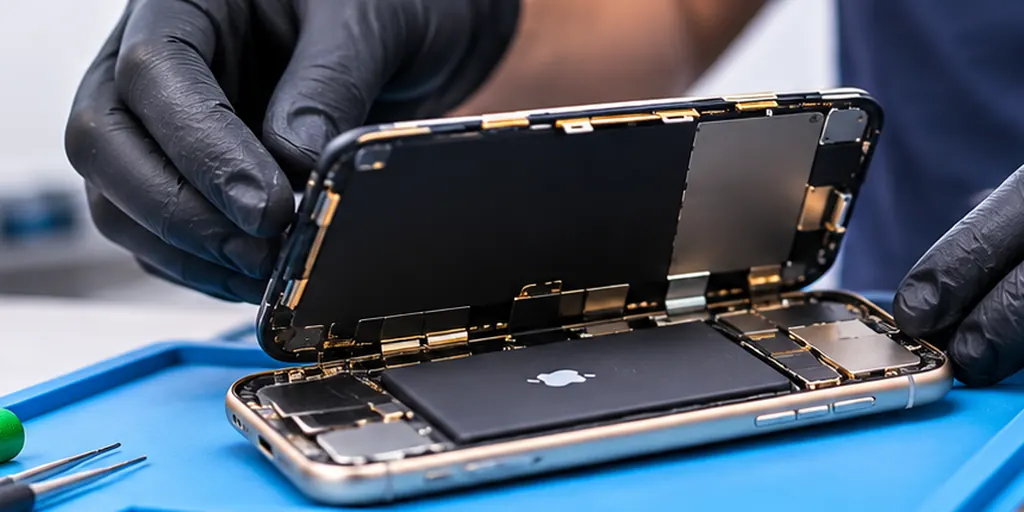
Replacement-part quality and compatibility are important considerations when repairing an Apple device.
Different devices require components with specific technical characteristics. Using unsuitable parts can affect functionality, reliability or compatibility.
For example, replacement displays may differ in brightness, colour reproduction, touch response and other features.
Questions to Ask About Replacement Parts
Before agreeing to a repair, ask:
What type of replacement part will be used?
Is the part compatible with my exact device model?
Will any features or functions be affected?
Is there a warranty covering the repair?
Will the replacement be explained before work begins?
A reputable provider should communicate clearly about the parts it proposes to use.
3. Protecting Your Personal Data Is Essential
Your iPhone, iPad or Mac may contain sensitive information, including personal photographs, emails, business documents, financial information and saved accounts.
When arranging a repair, data privacy should be a priority.
A trustworthy repair provider should explain how it handles customer devices and what access, if any, is needed to diagnose a fault.
How to Prepare Your Device for Repair
Before handing over your device:
Back up important information wherever possible.
Remove unnecessary sensitive information if practical.
Ask whether the repair could affect stored data.
Confirm whether any account-related steps are required.
Avoid sharing passwords unless there is a clear, justified need.
If your device has a storage fault or will not start, avoid making unnecessary changes that could complicate data recovery.
Important: No repair provider should guarantee that all data will remain intact during every repair. Maintaining a current backup is the safest approach.
4. Transparent Pricing Helps Avoid Unexpected Costs
Repair prices can vary depending on the device model, fault, replacement components and labour involved.
A reputable Apple repair service should provide clear information about pricing and explain when further assessment is necessary.
What Should a Repair Quote Include?
A useful repair quote should explain:
The identified or suspected fault
The proposed repair
The estimated cost
Any additional assessment charges
Whether the quote may change
The applicable warranty terms
Some faults cannot be priced accurately until the device has been inspected.
If a repair provider advertises prices starting from a particular amount, the final cost may depend on the device’s condition and the work required.
5. A Clear Repair Warranty Provides Reassurance
A repair warranty can help customers understand what support may be available if a related problem occurs after the repair.
However, warranties are not all the same.
Coverage may depend on the type of repair, replacement component and the provider’s terms.
What to Check Before Booking
Ask the repair provider:
How long does the warranty last?
Which components and faults are covered?
Are labour costs included?
What circumstances are excluded?
What happens if the same issue returns?
A reputable repair business should make its warranty conditions understandable before the repair is completed.
6. Professional Repair Can Help Avoid Further Damage
Apple devices are compact and contain closely integrated components.
Attempting complex repairs without suitable equipment or experience can create additional problems.
For example, an incorrectly fitted screen may affect display performance, while an unsuitable replacement component may cause compatibility issues.
Battery-related repairs also require appropriate safety procedures because damaged lithium-ion batteries can present a fire risk.
Professional assessment can help determine whether a repair is appropriate and what precautions are needed.
7. A Reputable Repair Service Should Explain the Repair Process
Good customer communication is an important part of professional repair services.
Customers should understand what is happening to their device, what work is proposed and what to expect afterwards.
A Typical Repair Process
Initial enquiry: The customer explains the device model and symptoms.
Device assessment: A technician examines the device to identify the likely fault.
Repair quotation: The provider explains the recommended work and estimated cost.
Customer approval: The customer decides whether to proceed.
Repair and testing: The agreed work is completed, followed by appropriate functional checks.
Collection and aftercare: The customer receives information about the completed repair and any applicable warranty.
Actual procedures and turnaround times vary between providers and repair types.
8. Customer Reviews Can Help You Make an Informed Decision
Online reviews can provide useful information about customers’ experiences with a repair business.
However, it is important to consider more than the overall star rating.
Look for feedback discussing:
Communication and customer service
Clarity of repair quotations
Device handling
Whether the reported problem was resolved
Aftercare and warranty support
How complaints were addressed
Reading a selection of recent, detailed reviews may provide a more balanced picture than relying on a single positive or negative comment.
9. Repairing Your Existing Device May Be More Cost-Effective
A damaged or malfunctioning Apple device does not always need replacing.
Depending on the model and fault, repairing an existing iPhone, MacBook or iPad may cost less than purchasing a new device.
Repair can also help reduce unnecessary electronic waste by extending the useful life of suitable devices.
When Might Repair Be Worth Considering?
Repair may be practical when:
The device still meets your needs.
The fault affects a repairable component.
Replacement parts are available.
The total repair cost is reasonable.
The device remains compatible with essential applications.
However, repair is not always the best option. Severe damage, unavailable parts or high repair costs may make replacement more sensible.
A reputable repair provider should help you understand these considerations rather than automatically recommending the most expensive option.
10. Understanding New Apple Technology Helps With Repair Decisions
Apple continues to introduce new iPhone features, camera systems, processors and software capabilities.
As devices become more advanced, repair considerations may also change.
For example, modern smartphones can include sophisticated camera modules, advanced displays, biometric authentication and tightly integrated internal components.
Understanding these technologies can help customers ask better questions when arranging repairs.
If you are interested in newer smartphone developments, read our guide to Apple iPhone 18 Pro features, camera and performance.
When considering repairs to a recently released device, always confirm that the repair provider supports the specific model and has access to suitable parts.
11. Why Choose a Local Apple Repair Service in Leicester?
Choosing a local repair provider can make communication and device collection more convenient.
For customers in Leicester and surrounding areas, a nearby repair business may offer practical advantages compared with sending a device to a distant provider.
Benefits of Choosing a Local Repair Business
Direct communication: You can explain the problem and discuss the available options.
Convenient access: A local service may reduce the need to send your device over long distances.
Clear assessment: You can ask questions about the diagnosis, proposed repair and estimated cost.
Aftercare: Returning to the same provider may be more convenient if you need follow-up support.
However, location alone does not establish repair quality. Always check technical experience, parts information, pricing transparency and warranty terms.
12. Questions to Ask Before Choosing an Apple Repair Service
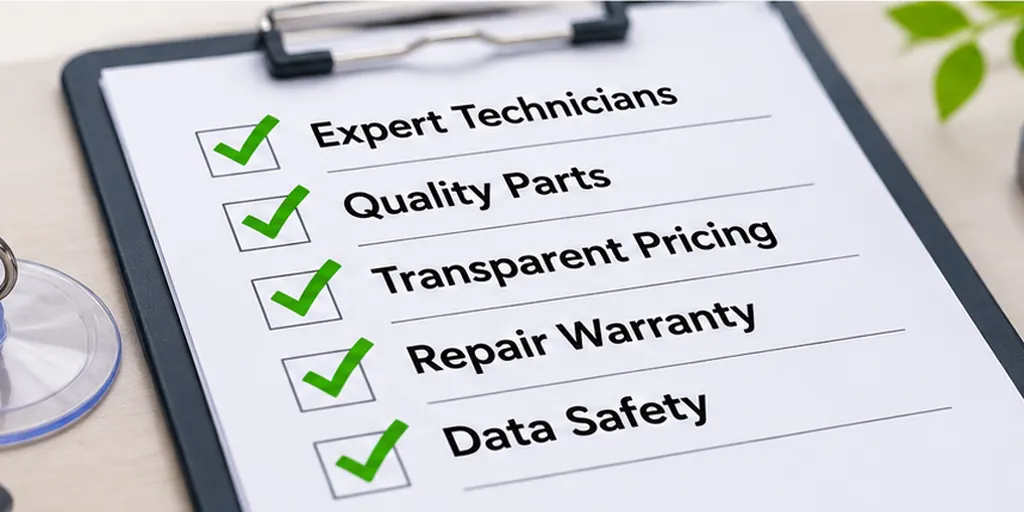
Before booking a repair, consider asking the following questions:
Do you repair my specific Apple device model?
Will you diagnose the problem before recommending replacement parts?
What type of replacement components do you use?
Can you explain the full estimated repair cost?
What warranty applies to the work?
How will my personal data be handled?
Is there a risk of data loss?
How long might the repair take?
What happens if the device cannot be repaired?
Will the device be tested before collection?
These questions can help you compare providers and choose a service that meets your requirements.
Conclusion: Choosing the Right Apple Repair Service Matters
Choosing a reputable Apple repair service is about more than finding the lowest advertised price.
Technical knowledge, accurate diagnosis, suitable replacement components, transparent pricing, data privacy and clear warranty terms all contribute to a positive repair experience.
Whether you need an iPhone screen assessed, a MacBook fault diagnosed or help with an iPad that will not charge, selecting a trustworthy provider can help you make a more informed repair decision.
Apple Repairs Leicester is an independent repair business offering assessment and repair services for supported Apple devices.
For enquiries about your device, visit Apple Repairs Leicester to discuss the symptoms and available repair options.
Apple Repairs Leicester is an independent business and is not affiliated with, authorised by or endorsed by Apple.